

Oyster Mushrooms
(Pleurotus spp.)
Oyster mushrooms are one of the most widely cultivated species in the world, known for their fast growth and adaptability. Originally found growing on decaying hardwoods across temperate and tropical regions, they are now a staple in both commercial and home cultivation. They are valued for their delicate texture, mild flavor, and ability to thrive on a wide range of agricultural substrates. Historically, oyster mushrooms have been associated with efficient food production due to their ability to convert waste into nourishment. In controlled environments, they grow on straw, sawdust, or supplemented organic materials. They prefer high humidity, steady fresh air exchange, and moderate temperatures to produce dense, layered clusters. Within Model 101, their rapid growth cycle makes them one of the most rewarding species to cultivate. Watching clusters emerge and expand over a matter of days creates a highly engaging growing experience.

Shiitake
(Lentinula edodes)
Shiitake mushrooms originate from East Asia and have been cultivated for centuries on hardwood logs. They are prized for their rich, umami flavor and their long-standing use in traditional medicine. Historically, shiitake has been associated with vitality and longevity, often appearing in cultural folklore and cuisine. In modern cultivation, they are typically grown on hardwood sawdust blocks or logs. They require slightly cooler temperatures and benefit from carefully managed humidity and airflow. Within a controlled system, they develop thick caps and firm texture, making them highly desirable for culinary use. Their slower growth compared to oysters is balanced by their density and flavor. Model 101 allows consistent environmental cycling, supporting repeatable flushes and reliable yields.

Button Mushrooms
(Agaricus bisporus)
Button mushrooms, including cremini and portobello varieties, are among the most commonly consumed mushrooms globally. They originate from grassland ecosystems in Europe and North America and are cultivated on composted organic substrates. Their mild flavor and versatility make them a staple ingredient across many cuisines. Historically, they have been one of the first mushrooms industrially cultivated at scale. They require a more controlled compost-based substrate compared to wood-loving species. Consistent humidity, temperature, and CO₂ management are essential for proper cap formation. Within Model 101, environmental precision helps stabilize conditions typically difficult to maintain at home. Their familiarity makes them an excellent reference point for new growers.

Lion’s Mane (Hericium erinaceus)
Lion’s Mane (Hericium erinaceus)
Lion’s Mane is a distinctive mushroom recognized by its cascading white spines and soft, fibrous texture. Native to North America, Europe, and Asia, it grows on hardwood trees in temperate forests. It is valued both for its culinary use and its association with cognitive health in traditional practices. Historically, it has been used in herbal traditions and is increasingly studied in modern research. It grows on hardwood sawdust and benefits from stable humidity and gentle airflow. It is sensitive to CO₂ levels, which influence its shape and density. Within Model 101, controlled airflow allows for consistent formation of its characteristic structure. Its unique appearance makes it one of the most visually engaging species to cultivate.

Reishi
(Ganoderma lucidum)
Reishi is a medicinal mushroom with a long history in East Asian traditions, often referred to as the “mushroom of immortality.” It grows naturally on hardwood trees and is valued more for its compounds than its culinary use. Historically, it has been associated with longevity and spiritual balance. It grows slowly and requires extended cultivation periods compared to culinary species. It thrives on hardwood substrates and requires stable humidity and controlled airflow. Its antler-like or shelf-like forms develop depending on environmental conditions. Within Model 101, its growth can be carefully shaped through environmental control. Its presence represents a slower, more intentional cultivation process.

Wine Cap
(Stropharia rugoso-annulata)
Reishi is a medicinal mushroom with a long history in East Asian traditions, often referred to as the “mushroom of immortality.” It grows naturally on hardwood trees and is valued more for its compounds than its culinary use. Historically, it has been associated with longevity and spiritual balance. It grows slowly and requires extended cultivation periods compared to culinary species. It thrives on hardwood substrates and requires stable humidity and controlled airflow. Its antler-like or shelf-like forms develop depending on environmental conditions. Within Model 101, its growth can be carefully shaped through environmental control. Its presence represents a slower, more intentional cultivation process.

Nameko
(Pholiota nameko)
Nameko mushrooms are native to East Asia and are known for their glossy, gelatinous caps. They are commonly used in Japanese cuisine, especially in soups and broths. Historically, they have been cultivated for both flavor and texture. They grow on hardwood substrates and require high humidity for proper cap development. Their slippery surface is a defining characteristic. They benefit from consistent airflow and moderate temperatures. Within Model 101, humidity control allows their texture to develop properly. Their visual uniqueness adds diversity to a grow cycle.

Enokitake
(Flammulina velutipes)
Enokitake mushrooms are known for their long, thin stems and small caps, commonly cultivated in low-light, high-CO₂ environments. They originate from East Asia and are traditionally grown in colder climates. They are valued for their delicate texture and mild flavor. Historically, their cultivated form differs significantly from their wild counterpart. They grow on hardwood substrates and require precise environmental manipulation. High CO₂ levels elongate stems, while lower light keeps caps small. Within Model 101, these variables can be controlled precisely. Their unique morphology makes them a visually distinctive species.
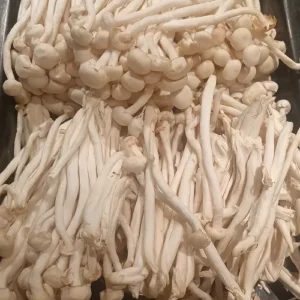
Beech Mushrooms
(Hypsizygus tessulatus)
Beech mushrooms are cultivated varieties known for their clustered growth and mild, slightly nutty flavor. Native to East Asia, they grow on hardwood substrates in natural environments. They are commonly used in soups and stir-fries. Historically, they have been selectively cultivated for uniformity and taste. They require moderate humidity and airflow for proper development. Their clusters form tightly packed structures that respond well to controlled conditions. Within Model 101, consistent airflow supports even growth across clusters. Their structure makes them visually appealing in group formations.

Pioppino
(Agrocybe aegerita)
Pioppino mushrooms originate from Southern Europe and are traditionally cultivated on poplar wood. They are valued for their firm texture and nutty flavor. Historically, they have been associated with Mediterranean cuisine. They grow on hardwood substrates and require stable humidity and moderate airflow. Their stems remain firm while caps develop gradually. Within Model 101, their growth can be stabilized for consistent yields. Their flavor profile makes them a versatile culinary species.

King Trumpet
(Pleurotus eryngii)
King Trumpet mushrooms are a dense, thick-stemmed species prized for their texture and versatility. Native to Mediterranean regions, they grow in association with plant roots. They are often used as a meat substitute due to their firm structure. Historically, they have been cultivated for their culinary adaptability. They grow on supplemented hardwood substrates and benefit from controlled airflow. Their shape can be influenced by environmental conditions. Within Model 101, they develop consistent size and density. Their structure makes them ideal for a wide range of culinary applications.

Maitake
(Grifola frondosa)
Maitake, also known as Hen-of-the-Woods, is a clustered mushroom found at the base of hardwood trees. Native to North America and Japan, it has long been valued for both culinary and medicinal use. Historically, it has been associated with vitality and seasonal harvesting traditions. It grows on hardwood substrates and requires extended cultivation time. It prefers stable humidity and careful airflow control. Its layered structure develops gradually over time. Within Model 101, consistent conditions support full cluster formation. Its complex shape makes it a rewarding species to grow.

Shaggy Mane
(Coprinus comatus)
Shaggy Mane mushrooms are fast-growing species known for their tall, cylindrical caps. They are commonly found in grasslands and disturbed soils. They are valued for their delicate texture but must be harvested quickly before they begin to self-digest. Historically, they have been associated with ephemeral growth cycles. They grow on nutrient-rich compost and require high moisture. Their lifecycle is short but rapid. Within Model 101, timing and environmental control allow for successful harvests. Their fast growth adds variety to cultivation cycles.

Chicken of the Woods
(Laetiporus spp.)
Chicken of the Woods is a brightly colored shelf mushroom known for its meat-like texture. It grows on hardwood trees in forests across North America and Europe. It is highly valued for its culinary versatility. Historically, it has been foraged rather than widely cultivated. It grows on hardwood logs and requires specific conditions for successful fruiting. It benefits from stable humidity and airflow. Within Model 101, controlled environments allow experimentation with cultivation methods. Its vivid color and texture make it a standout species.

Coral Tooth
(Hericium coralloides)
Coral Tooth mushrooms are closely related to Lion’s Mane and are known for their branching, coral-like structure. They grow on hardwood in temperate forests and are less commonly cultivated. They are valued for both their appearance and culinary use. Historically, they have been associated with forest ecosystems and seasonal growth. They grow on hardwood substrates and require stable humidity and airflow. Their branching structure is sensitive to environmental conditions. Within Model 101, their form can be supported through controlled airflow. Their appearance makes them one of the most visually intricate species.

Moth Orchid
(Phalaenopsis)
Moth orchids are among the most widely cultivated orchids, native to Southeast Asia. They are known for their broad, elegant flowers and extended blooming periods. They are grown primarily for ornamental display and long-lasting visual presence in interior spaces. Historically, orchids have symbolized refinement and beauty across cultures, often associated with care and attention. Phalaenopsis species grow as epiphytes, attaching to trees and absorbing moisture from the surrounding air. In cultivation, they thrive in stable humidity, indirect light, and consistent airflow. Within Model 101, environmental stability allows their blooms to last longer and develop more uniformly. Their forgiving nature makes them one of the most accessible orchid species for beginners.

Queen of Orchids / Cattleya
(Cattleya spp.)
Cattleya orchids are native to Central and South America and are known for their large, fragrant flowers. They are often associated with corsages and formal floral arrangements. They are cultivated primarily for their bold color and strong scent. Historically, they have been symbols of elegance and celebration. They grow as epiphytes on trees and require bright, indirect light. They prefer distinct wet and dry cycles, along with strong airflow. Within Model 101, controlled lighting and humidity allow consistent blooming cycles. Their dramatic flowers make them a focal point in any growing environment.

Dendrobium bigibbum and hybrids
(Dendrobium spp.)
Dendrobium orchids are a diverse genus found across Asia and Australia. They are known for their upright canes and clusters of flowers along each stem. They are grown for their structured form and repeat blooming potential. Historically, they have been used in traditional medicine and ornamental horticulture. They grow as epiphytes and require alternating periods of moisture and dryness. They benefit from moderate light and consistent airflow. Within Model 101, their growth cycles can be stabilized for repeat flowering. Their vertical structure adds architectural interest to the system.

Vanda
(Vanda spp.)
Vanda orchids are native to tropical Asia and are known for their vibrant, large flowers and aerial root systems. They are cultivated for their intense coloration and striking visual impact. Historically, they have been prized in tropical horticulture collections. They grow without traditional potting media, absorbing moisture directly through their roots. They require high humidity, strong airflow, and bright light. Within Model 101, environmental precision allows their demanding conditions to be maintained consistently. Their exposed root systems make them visually distinct from other orchids. They represent a more advanced level of cultivation.

Dancing Lady Orchids / Oncidium
(Oncidium spp.)
Oncidium orchids, often called “dancing lady” orchids, are native to the Americas. They are known for their numerous small flowers arranged on branching spikes. They are grown for their lively appearance and abundance of blooms. Historically, they have been associated with movement and delicacy. They grow as epiphytes and require moderate humidity and airflow. They benefit from bright, indirect light and consistent conditions. Within Model 101, their flowering can be stabilized across cycles. Their abundance creates a dynamic visual presence.

Slipper Orchid / Paphiopedilum
(Paphiopedilum spp.)
Paphiopedilum orchids, also known as lady slipper orchids, are native to Southeast Asia. They are known for their pouch-shaped flowers and unique forms. They are cultivated for their unusual structure and long-lasting blooms. Historically, they have been prized by collectors for their distinct appearance. Unlike many orchids, they grow in soil-like media rather than as epiphytes. They require stable moisture and moderate light. Within Model 101, their conditions can be maintained consistently for extended bloom duration. Their sculptural form makes them highly distinctive.

Cymbidium
(Cymbidium spp.)
Cymbidium orchids are native to Asia and Australia and are known for their tall flower spikes and numerous blooms. They are cultivated for their structured elegance and long-lasting flowers. Historically, they have been associated with nobility and refinement. They grow in cooler conditions than many tropical orchids. They require bright light and consistent watering cycles. Within Model 101, temperature control allows for stable flowering conditions. Their height and structure create a strong vertical presence.

Dwarf Jade
(Portulacaria afra)
Dwarf Jade is a succulent species native to South Africa, widely used in bonsai due to its thick trunk and small, rounded leaves. It is cultivated for its ability to quickly develop the appearance of an aged tree with minimal effort. Historically, it has been associated with resilience and longevity in arid environments. Unlike traditional bonsai trees, it stores water in its leaves and trunk, making it highly drought-tolerant. It grows in well-draining, mineral-rich substrates and requires less frequent watering than most bonsai species. It prefers bright light and moderate airflow to maintain compact growth. Within Model 101, controlled lighting and airflow help maintain tight leaf spacing and structure. Its forgiving nature makes it one of the best entry points into bonsai cultivation.

Hawaiian Umbrella Tree
(Schefflera arboricola)
The Hawaiian Umbrella Tree is a tropical plant native to Taiwan and Southeast Asia, commonly used in indoor bonsai cultivation. It is known for its glossy, umbrella-like leaf clusters and flexible growth habit. It is cultivated for its adaptability and ability to form miniature tree shapes with minimal stress. Historically, it has been favored in indoor bonsai collections due to its tolerance for lower light conditions. It grows in well-draining soil and responds well to pruning and shaping. It thrives in stable humidity and moderate temperatures. Within Model 101, environmental consistency supports dense foliage and controlled growth. Its resilience makes it an excellent species for beginners exploring bonsai in controlled environments.

Ficus
(Ficus retusa, benjamina)
Ficus species are among the most commonly used trees in bonsai cultivation due to their resilience and adaptability. Native to tropical and subtropical regions, they thrive in warm, humid environments. They are cultivated for their ability to form miniature tree structures that resemble full-sized trees. Historically, bonsai originated from ancient Chinese and Japanese traditions focused on shaping living landscapes. Ficus trees grow in well-draining substrates and respond well to pruning and shaping. They tolerate environmental variation better than most species. Within Model 101, stable humidity and temperature support consistent growth. Their forgiving nature makes them ideal for beginners.

Juniper
(Juniperus spp.)
Juniper bonsai are one of the most iconic forms of bonsai cultivation, native to many regions across the Northern Hemisphere. They are known for their needle-like foliage and natural rugged appearance. They are cultivated to resemble windswept or ancient trees. Historically, they have been central to traditional bonsai practice. They grow in well-draining soil and require consistent light and airflow. They prefer drier conditions compared to tropical species. Within Model 101, airflow and light control support their development. Their structure makes them highly expressive in design.

Japanese Maple
(Acer palmatum)
Japanese maple is a highly valued bonsai species known for its delicate leaves and seasonal color changes. Native to Japan, Korea, and China, it is cultivated for its aesthetic beauty. It is grown to highlight seasonal transitions, particularly in autumn. Historically, it has been associated with tranquility and natural beauty. It grows in well-draining soil and requires careful watering. It prefers moderate light and stable temperatures. Within Model 101, environmental stability reduces stress on the plant. Its changing colors make it visually dynamic throughout the year.

Chinese Elm
(Ulmus parvifolia)
Chinese elm is a popular bonsai species known for its small leaves and fine branching structure. Native to East Asia, it is valued for its adaptability and classic bonsai appearance. It is cultivated to create traditional tree forms. Historically, it has been widely used in bonsai training due to its resilience. It grows in well-draining soil and tolerates a range of conditions. It responds well to pruning and shaping. Within Model 101, stable conditions support consistent growth patterns. Its versatility makes it suitable for both beginners and experienced growers.

Fukien Tea
(Carmona retusa / Ehretia microphylla)
Fukien Tea is a tropical bonsai species native to Southeast Asia, known for its small dark green leaves and delicate white flowers. It is cultivated for its fine branching structure and ability to produce both flowers and small berries. Historically, it has been a popular bonsai species in Chinese horticulture. It grows in well-draining soil and requires consistent moisture without overwatering. It prefers warm temperatures, stable humidity, and good airflow. It is more sensitive to environmental changes than beginner species. Within Model 101, stable conditions reduce stress and support flowering cycles. Its refined appearance makes it a more advanced but rewarding bonsai choice.

Chinese Pepper
(Zanthoxylum spp.)
Chinese Pepper, often associated with Sichuan pepper, is a deciduous shrub or small tree native to East Asia. It is cultivated both for its ornamental qualities and its aromatic seed husks used in cuisine. It is valued for its textured bark, compound leaves, and occasional thorny branches. Historically, it has been used in both culinary and medicinal traditions. It grows in well-draining soil and benefits from moderate light and airflow. It requires seasonal variation to fully express its growth cycle. Within Model 101, environmental control can support early-stage development and structure formation. Its dual-purpose nature makes it a unique addition to a bonsai collection.

Pine
(Pinus spp.)
Pine bonsai represent one of the most traditional and respected forms of bonsai cultivation. Native to many regions, they are cultivated for their longevity and symbolic strength. They are often shaped to resemble ancient trees. Historically, pine trees have been associated with endurance and resilience. They grow in well-draining soil and require precise watering and pruning. They prefer strong light and airflow. Within Model 101, environmental consistency can support their early development stages. Their slow growth requires patience and skill. They are considered a long-term bonsai investment.